After Execution Modifiers
Transform tool results after execution
After execution modifiers are part of Composio SDK's powerful middleware capabilities that allow you to customize and extend the behavior of tools.
These modifiers are called after the tool is executed. This allows you to modify the result of the tool before it is returned to the agent.
Useful for:
- Modifying or truncating the output of the tool
- Converting the output to a different format before returning it to the agent
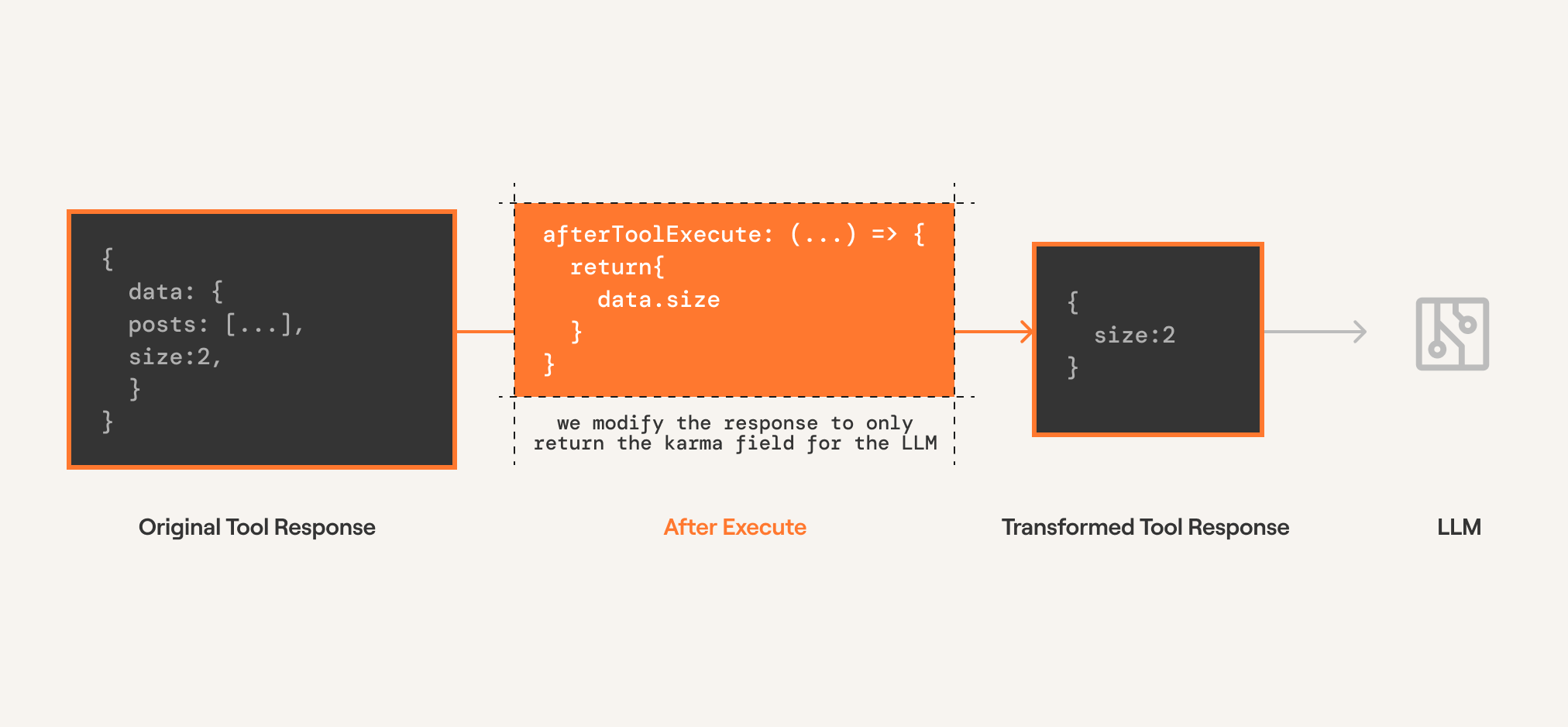
Below we use the afterExecute modifier to truncate the output of HACKERNEWS_GET_USER and only return the karma of the user.
With Chat Completions
Since completion providers don't have a function execution step, Composio executes the tool call directly. The modifier is configured on the tools.execute method.
from composio import Composio, after_execute
from composio.types import ToolExecutionResponse

@after_execute(tools=["HACKERNEWS_GET_USER"])
def after_execute_modifier(
    tool: str,
    toolkit: str,
    response: ToolExecutionResponse,
) -> ToolExecutionResponse:
    return {
        **response,
        "data": {
            "karma": response["data"]["karma"],
        },
    }

tools = composio.tools.get(user_id=user_id, slug="HACKERNEWS_GET_USER")

# Get response from the LLM
response = openai_client.chat.completions.create(
    model="gpt-4o-mini",
    tools=tools,
    messages=messages,
)
print(response)

# Execute the function calls
result = composio.provider.handle_tool_calls(
  response=response,
  user_id="default",
  modifiers=[
     after_execute_modifier,
  ]
)
print(result)
const response = await openai.chat.completions.create({
model: "gpt-4o-mini",
messages,
tools,
tool_choice: "auto",
});
const { tool_calls } = response.choices[0].message;
console.log(tool_calls);
if (tool_calls) {
const {
function: { arguments: toolArgs },
} = tool_calls[0];
const result = await composio.tools.execute(
"HACKERNEWS_GET_USER",
{
userId,
arguments: JSON.parse(toolArgs),
},
{
afterExecute: ({ toolSlug, toolkitSlug, result }) => {
if (toolSlug === "HACKERNEWS_GET_USER") {
const { data } = result;
const { karma } = data.response_data as { karma: number };
return {
...result,
data: { karma },
};
}
return result;
},
}
);
console.log(JSON.stringify(result, null, 2));
}With Agentic Frameworks
Agentic providers have a function execution step. The modifier is configured on the tools.get method which modifies the execution logic within the framework.
from composio import Composio, after_execute
from composio.types import ToolExecutionResponse
from composio_crewai import CrewAIProvider

composio = Composio(provider=CrewAIProvider())

@after_execute(tools=["HACKERNEWS_GET_USER"])
def after_execute_modifier(
    tool: str,
    toolkit: str,
    response: ToolExecutionResponse,
) -> ToolExecutionResponse:
    return {
        **response,
        "data": {
            "karma": response["data"]["karma"],
        },
    }

tools = composio.tools.get(
    user_id="default",
    slug="HACKERNEWS_GET_USER",
    modifiers=[
        after_execute_modifier,
    ]
)
import { Composio } from "@composio/core";
import { VercelProvider } from "@composio/vercel";
import { v4 as uuidv4 } from "uuid";
const composio = new Composio({
apiKey: process.env.COMPOSIO_API_KEY,
provider: new VercelProvider(),
});
const userId = uuidv4();
const agenticTools = await composio.tools.get(
userId,
{
tools: ["HACKERNEWS_GET_USER"],
},
{
afterExecute: ({ toolSlug, toolkitSlug, result }) => {
if (toolSlug === "HACKERNEWS_GET_USER") {
const {
data: { response_data: { karma } = {} } = {},
} = result;
return {
...result,
data: { karma },
};
}
return result;
},
}
);